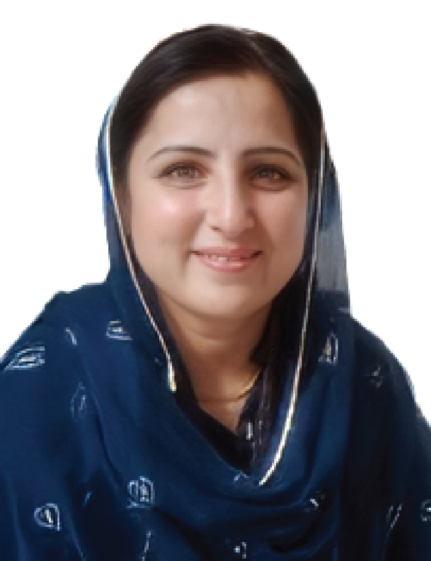
Dr. Sadia Fatima holds a PhD in Human Nutrition from the University of Glasgow, UK, and an MBBS from Ayub Medical College, Abbottabad. She also completed a Postgraduate Diploma (PGD) in Human Nutrition from the University of Glasgow in 2015. Currently, Dr. Fatima serves as Director at the Institute of Health Sciences Hazara, Khyber Medical University (KMU), and as Professor at the Institute of Basic Medical Sciences, KMU Peshawar. Her primary research interests focus on undernourished and malnourished children and young adults. Her doctoral research examined energy intake compensation in lean adult women following the consumption of High Energy Nutrient Supplements for the Disadvantaged (HENSD), investigating its relationship with hormonal and metabolic appetite regulators and gastric emptying. She further explored energy intake compensation over a five-day supplementation period and assessed its effects on plasma lipids and insulin sensitivity. Dr. Fatima is currently involved in several research projects, including BIZIFED2, the ketogenic diet, Tuberculosis, Maternal and child nutrition, particularly focusing on underweight pregnant women and small-for-gestational-age (SGA) infants. Her ongoing work explores the metabolic effects of prolonged or varying levels of HENSD supplementation in underweight pregnant women, as well as in healthy and obese individuals. She is also assessing the long-term outcomes and potential side effects of energy-dense, lipid-based nutritional supplements such as Ready-to-Use Therapeutic Foods (RUTF) in malnourished children. Dr. Fatima has published over 60 research papers in reputable scientific journals, demonstrating her expertise in human nutrition and biochemistry. She has successfully supervised two PhD scholars. As one of the few female experts in human nutrition in her province, and with a particular focus on child health, Dr. Fatima is dedicated to addressing local nutritional challenges. She aims to establish a state-of-the-art laboratory to conduct region-specific research on malnutrition, including its treatment, management, and prevention—recognizing that Western research may not fully apply to the local context.