

Data Analysis in R and Python with Generative AI for Biomedical Research: Transform Biomedical Data to Clinical Insights FHCC 2026
Introduction
The rapid growth of biomedical and healthcare data has fundamentally transformed scientific research and clinical decision-making. Modern biomedical investigations generate large and complex datasets from clinical studies, genomics, laboratory diagnostics, public health surveillance, and healthcare systems, requiring researchers to possess advanced analytical skills for effective interpretation and evidence generation. At the same time, Generative Artificial Intelligence (GenAI) is revolutionizing research by assisting with coding, data cleaning, statistical analysis, visualization, interpretation, and scientific reporting. :contentReference[oaicite:0]{index=0}
This interactive workshop is designed to bridge the gap between traditional biomedical research and modern computational approaches by providing participants with practical experience in both R and Python, integrated with Generative AI tools. Through hands-on demonstrations and guided exercises, participants will learn to manage, analyze, visualize, and interpret biomedical datasets while developing reproducible analytical workflows that support high-quality research and evidence-based healthcare. :contentReference[oaicite:1]{index=1} :contentReference[oaicite:2]{index=2}
Learning Outcomes
By the end of this workshop, participants will be able to:
- Understand the role of data science, artificial intelligence, and computational analytics in biomedical and healthcare research.
- Import, clean, transform, and manage biomedical datasets using R and Python.
- Perform descriptive and inferential statistical analyses relevant to biomedical sciences.
- Create publication-quality data visualizations and interactive analytical outputs.
- Utilize Generative AI tools for code generation, debugging, workflow optimization, and research support.
- Apply basic machine learning and predictive analytics techniques to biomedical datasets.
- Interpret analytical results and communicate evidence-based findings effectively for scientific publication.
- Develop reproducible analytical workflows and research documentation that support transparent and high-quality biomedical research.
Target Audience
- Biomedical, biotechnology, life sciences, health sciences, and data science researchers.
- Faculty members and academic researchers.
- MS, M.Phil., and PhD scholars.
- Medical laboratory scientists and technologists.
- Healthcare professionals and clinicians interested in biomedical data analytics.
- Public health researchers and epidemiologists.
- Clinical researchers seeking practical skills in computational data analysis.
Workshop Structure
| Module | Topics Covered |
|---|---|
| Module 1 Introduction to Biomedical Data Science |
Biomedical data types, data-driven healthcare, precision medicine, and an overview of R and Python ecosystems. |
| Module 2 Data Management & Cleaning |
Importing datasets, handling missing values, data transformation, preprocessing, and quality assessment. |
| Module 3 Statistical Analysis |
Descriptive statistics, hypothesis testing, correlation analysis, regression modelling, and biomedical research applications. |
| Module 4 Data Visualization |
Visualization principles, publication-quality figures, graphical reporting, and interactive dashboards. |
| Module 5 Generative AI for Research |
AI-assisted coding, automated data exploration, AI-supported interpretation of results, and responsible AI practices. |
| Module 6 Machine Learning Applications |
Classification, prediction, model evaluation, and practical biomedical case studies. |
Training Methodology
- Interactive lectures and expert-led discussions.
- Live software demonstrations using R and Python.
- Guided hands-on practical exercises.
- Biomedical case studies and real-world datasets.
- AI-assisted coding and data analysis activities.
- Group discussions and collaborative problem-solving sessions.
Expected Impact
The workshop will equip participants with practical competencies in biomedical data science, statistical analysis, and AI-assisted research methodologies, enabling them to efficiently analyze complex biomedical datasets and generate reproducible, high-quality scientific evidence. Participants will gain confidence in applying modern computational tools to improve research productivity, data interpretation, and scientific communication. :contentReference[oaicite:3]{index=3}
By integrating data science, machine learning, and Generative AI into biomedical research workflows, the workshop will contribute to building a future-ready healthcare workforce capable of leveraging advanced computational technologies for precision medicine, evidence-based healthcare, and scientific innovation. :contentReference[oaicite:4]{index=4}
Facilitators

Dr. Muhammad Afzal
Assistant Professor
Department of Biological & Health Sciences
Pak-Austria Fachhochschule: Institute of Applied Sciences and Technology (PAF-IAST), Haripur, Pakistan
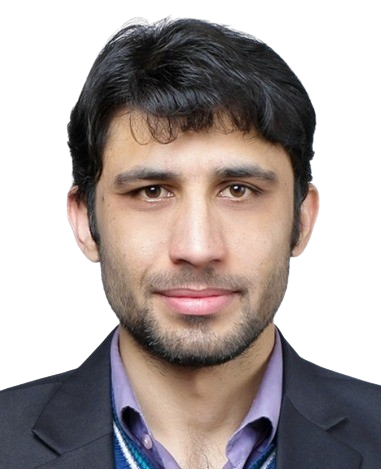
Dr. Arshad Iqbal
Department of Computer Sciences
Pak-Austria Fachhochschule: Institute of Applied Sciences and Technology (PAF-IAST), Haripur, Pakistan